
Frequently Asked Questions
Q: What age should I start training my dog?
A: Dogs can begin learning at any age! Puppies benefit from early training and socialization, while adult and senior dogs can learn new skills and improve existing behaviors. Training plans are adjusted based on your dog's age, temperament, history, and goals.
AND YES, here at Kristen's K9 Dog Training, we DO accept seniors for training!


Q: What can you guarantee?
A: We don't guarantee a specific behavioral outcome or timeline. Every dog is an individual, and progress depends on factors including the dog's history, temperament, environment, and consistency between lessons. We do guarantee that you'll receive an individualized training plan, guidance, homework, and support throughout the process.
Q: Do I (the owner) need to be an active part in training?
A: Yes! Whether you are doing 1:1's, school, or a B&T-- Training isn't just about teaching your dog, it’s about building a communication system and bond between you and your dog. Your dog needs to understand that the same skills apply with you at home, not just with their trainer. By participating in the process, you'll learn how to communicate clearly, follow through, and reinforce the behaviors we're working toward while building a stronger, more trusting relationship with your dog.

Q: Does socialization mean my dog will play with other dogs?
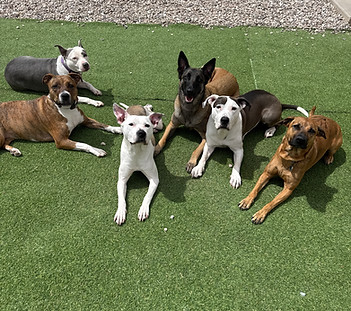
A: Not necessarily. Socialization isn't simply putting your dog around as many people or dogs as possible, and it doesn't mean they need to play or greet every dog they meet. We focus on helping dogs become confident, neutral, and adaptable around new people, dogs, environments, sounds, and experiences while teaching appropriate interactions, handler engagement, and the ability to comfortably exist in different environments.
Q: What training methods do you use, and what if you're not the right fit for my dog?
A: We consider ourselves a balanced training program, using multiple tools and techniques based on the individual dog, their behavior, and your goals. Our approach is rooted in learning and behavior science and incorporates food, play, leash pressure, management, and training tools such as slips, prong collars or e-collars when appropriate. We start with the least aversive approach needed and adjust as necessary, with any training tools introduced through proper instruction and conditioning.
Every dog is different, and sometimes a case requires a different professional, additional resources, or veterinary involvement. If our program isn't the right fit for you and your dog, I'll be honest about it and help point you in the right direction rather than recommending a service that isn't appropriate for your needs!
